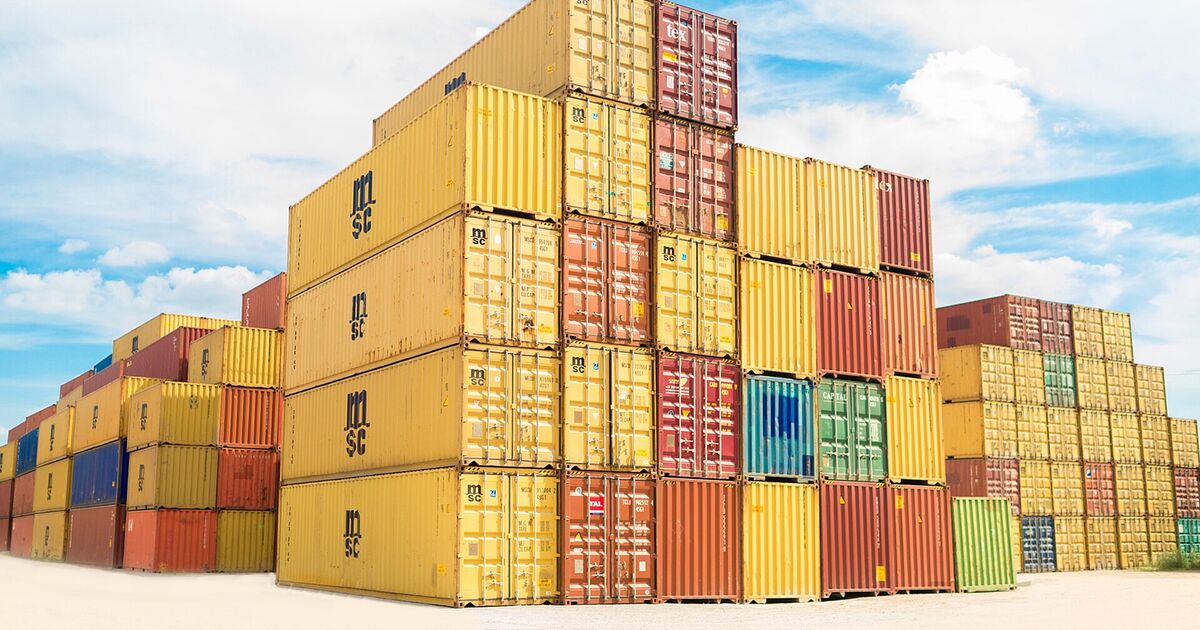
The ISO shipping container is one of the most standardised objects in world trade, which makes planning simple — up to a point. The external size is fixed. The internal space, the weight a box may carry, and the number of pallets that fit are where plans go wrong.
The three boxes that carry most cargo
The figures below are typical for standard dry containers. Individual units vary slightly by manufacturer and age, so treat them as planning figures and read the actual values from the container door.
| 20ft standard | 40ft standard | 40ft high cube | |
|---|---|---|---|
| Internal length | about 5.90 m | about 12.03 m | about 12.03 m |
| Internal width | about 2.35 m | about 2.35 m | about 2.35 m |
| Internal height | about 2.39 m | about 2.39 m | about 2.69 m |
| Capacity | about 33 m³ | about 67 m³ | about 76 m³ |
| Tare weight | about 2.2 t | about 3.7 t | about 3.9 t |
A 20-foot container is one TEU, the twenty-foot equivalent unit in which vessel and port capacity are counted. A 40-foot container is two TEU, or one FEU. The high cube is the same footprint as the 40-foot standard but about 30 centimetres taller, and has become the default 40-foot box on most trades. A 45-foot high cube, holding about 86 cubic metres, is available on some lanes.
The door is smaller than the box
Cargo has to pass through the door opening, which is narrower and lower than the interior — roughly 2.34 metres wide and 2.28 metres high on a standard container, about 2.58 metres high on a high cube. A crate that would fit inside may not go through the door, and a forklift mast has to clear the header as well.
Volume is not the only limit
Every container carries a plate showing its maximum gross weight, its tare (empty) weight, and the payload — the difference between them. A common rating is 30,480 kg gross, and many newer boxes are rated higher. The important consequence is that a 40-foot container has a similar gross rating to a 20-foot one. It offers double the space, not double the payload.
That is why cargo sorts itself by density:
- Dense cargo — steel, tiles, paper, liquids in drums — reaches the weight limit long before the container is full. It moves in 20-foot boxes.
- Light cargo — furniture, garments, plastics, packaged consumer goods — fills the space long before the weight limit. It moves in 40-foot and high cube boxes.
In practice the limit that bites first is usually not the container's. Road weight limits at origin and destination are often well below what the box is rated to carry, and they vary by country, by state and by the truck and chassis used. A container loaded to its plated payload may be legal on the ship and illegal on the road at either end. Confirm the over-the-road limit with the haulier before stuffing.
Shippers must also declare the verified gross mass of every packed container before it is loaded on a vessel. This has been a SOLAS requirement since July 2016, and a container without a VGM is not loaded.
How many pallets fit
Single layer, not stacked:
| 20ft | 40ft / 40ft high cube | |
|---|---|---|
| Euro pallets (1200 × 800 mm) | 11 | 24 to 25 |
| Standard pallets (1200 × 1000 mm) | 10 | 21 |
These counts depend on turning some pallets lengthwise and others crosswise, and on pallets that do not overhang. If the cargo is stackable, the high cube's extra height can allow a second tier that a standard box would not.
Loading it well
A good load plan does three things. It spreads weight evenly along the floor, with heavier items low and the centre of gravity near the middle. It leaves no room for movement — gaps are blocked, braced or filled with dunnage. And it keeps the weight within the limits for the container and the road.
Usable volume is always less than the theoretical capacity. Cartons do not tessellate perfectly, pallets waste height, and odd-shaped pieces leave voids. Planning on around 85 to 90 per cent of the nominal volume is realistic for palletised cargo.
The load calculator works this out for a real packing list: enter the pieces and it shows how they fit a 20-foot or 40-foot container, with the volume and weight utilisation for each.
Special equipment in brief
- Reefer — refrigerated, for temperature-controlled cargo. Insulation and machinery reduce the internal space.
- Open top — a removable tarpaulin roof, for cargo loaded by crane or slightly over height.
- Flat rack — no side walls or roof, for heavy or over-width pieces.
- Tank container — a tank in an ISO frame, for bulk liquids.
Each has its own dimensions, payload and availability, and each needs to be confirmed with the carrier at booking rather than assumed.
Reading the container number
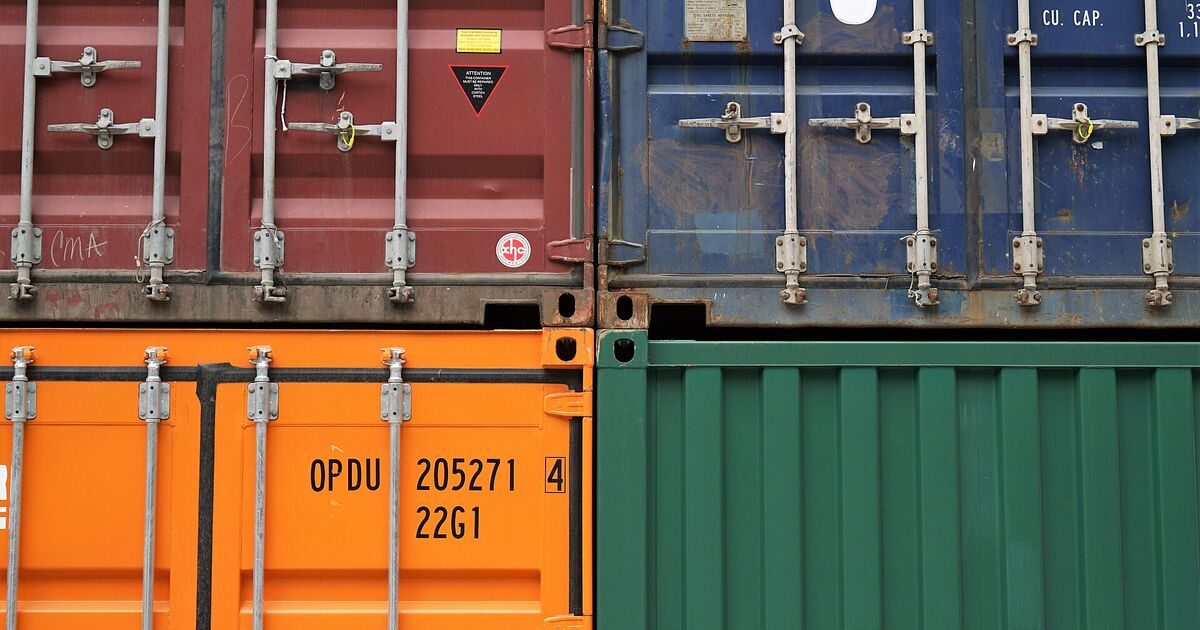
Every container carries a unique identifier in a standard format: four letters — a three-letter owner code and an equipment category letter, usually U — followed by six digits and a check digit. Owner codes are registered with the Bureau International des Containers. The check digit lets a system catch a mistyped number, which is why container tracking can reject an invalid one before it searches.